
Standard white distilled vinegar has an acetic acid concentration of 5 percent, which makes it an effective household descaler and mild disinfectant. However, the sharp, pungent vapor can make cleaning enclosed spaces an unpleasant chore. Infusing that vinegar with discarded citrus rinds does more than simply mask the sour odor. It extracts plant-derived solvent compounds that noticeably improve how the solution cuts through grease and kitchen grime.
Turning kitchen scrap into an effective surface cleaner requires more care than simply tossing leftover fruit into an open jar under the sink. Temperature, steeping duration, particulate filtration, and dilution rates all dictate whether you end up with a crisp, streak-free degreaser or a cloudy, sticky liquid that clogs spray nozzles within a week. With a few deliberate adjustments to how you collect, steep, and filter your peels, you can produce a shelf-stable cleaner that costs pennies per bottle.
The Chemistry of Citrus Terpenes and Acetic Acid
The cleaning power of citrus-infused vinegar relies on the pairing of two distinct chemical agents: acetic acid from the fermented vinegar and d-limonene extracted from the citrus rinds. Acetic acid is a polar solvent. It excels at breaking down inorganic deposits such as hard water scale, calcium carbonate, mineral salts, and alkaline soap scum. On its own, however, acetic acid struggles to break down non-polar kitchen soils such as cooking grease, butter splatters, and vegetable oil films.
Citrus peels solve this limitation. The outer colored layer of the rind, known as the flavedo, contains discrete oil glands packed with terpenes, predominantly d-limonene. This hydrocarbon solvent dissolves lipids, wax, and non-polar residues with remarkable efficiency. When submerged in vinegar, the acetic acid acts as an extraction medium, drawing these volatile oils out of the rind's ruptured oil glands and suspending them throughout the liquid.
The challenge lies in avoiding the inner white layer of the peel, known as the albedo or pith. The albedo contains high concentrations of pectin, complex polysaccharides, and bitter flavonoids. When soaked for extended periods, the pectin dissolves into the acidic solution. While pectin provides structure in jam making, it causes headaches in household cleaning. Pectin residues leave a tacky, micro-thin film on smooth surfaces that attracts airborne dust within hours of wiping. Maximizing d-limonene while minimizing dissolved pectin is the central goal of proper infusion.
Preparing and Freezing Peels Until You Have Enough
Most households consume citrus fruits in small increments: a lemon wedge for tea, half a lime for a recipe, or an orange as an afternoon snack. Attempting to steep peels one piece at a time leads to inconsistent extraction times, with the earliest peels rotting or breaking down before the jar is even half full. The solution is cold storage batching.
Before saving any rind, rinse the whole fruit under warm running water to remove transit wax, dirt, and residual agricultural sprays. Once the fruit is peeled or juiced, inspect the rind. Use a small paring knife or the edge of a spoon to scrape away thick white pith from orange and grapefruit rinds. Lemon and lime rinds have thinner pith layers and require less scraping, but any remaining pulp or juice sacs must be scraped away entirely. Residual fruit sugars ferment quickly, clouding the liquid and feeding wild molds.
Place the cleaned, prepped rinds into a freezer-safe silicone pouch or glass container in your freezer. Freezing offers a functional chemical benefit beyond storage: water inside the plant tissues expands as it forms ice crystals. These expanding crystals rupture the cell walls of the flavedo. When you eventually thaw the rinds in vinegar, the trapped d-limonene releases into the solvent much faster than it would from fresh, intact peel tissue.
Continue freezing rinds until you have collected approximately 250 to 300 grams of peels. This volume neatly fills a standard one-quart wide-mouth glass jar to roughly three-quarters of its capacity without compacting the rinds too densely.
Steeping Schedules and Optimal Jar Placement
When you are ready to begin, transfer the frozen peels directly into a thoroughly cleaned glass jar. Pour standard 5 percent distilled white vinegar over the peels until they are completely submerged, leaving roughly one inch of headspace at the top of the jar. Avoid using apple cider vinegar, wine vinegar, or cleaning vinegars with unspecified industrial additives. Distilled white grain vinegar provides a clean, neutral baseline with reliable acidity and zero residual sugars.
Peels naturally float, which presents a spoilage risk. Any peel tissue resting above the liquid line is exposed to ambient oxygen and moisture, creating a breeding ground for surface mold. To prevent this, weigh the rinds down using a clean glass fermentation weight, a small ceramic dipping dish, or a clean river stone wrapped in parchment paper. If you lack a weight, make a habit of swirling the jar once daily to keep all peel surfaces washed in acid.
| Steeping Window | Aroma Profile | Solvent Strength | Liquid Clarity | Recommendation |
|---|---|---|---|---|
| 3 to 7 days | Sharp vinegar, faint citrus | Low terpene levels | Clear, light tint | Under-extracted; allow more time. |
| 14 to 21 days | Bright, crisp, balanced | Optimal d-limonene content | Translucent amber or gold | Ideal extraction balance for cleaning. |
| 30 days or more | Bitter, dull, oxidized | High terpene, high pectin | Cloudy, prone to haze | Over-extracted; risks sticky residue. |
Keep your steeping jar in a cool, dark cabinet or pantry shelf where temperatures remain between 16 and 22 degrees Celsius. Direct sunlight and heat sources degrade volatile terpenes through photo-oxidation, turning bright citrus compounds into dark, flat-smelling byproducts. A minimum steeping duration of 14 days allows sufficient time for the acetic acid to draw the oils out of the ruptured plant cells. Terminate the steeping process before the 28-day mark to prevent pectin breakdown.
Straining Fine Sediments to Prevent Clogged Sprayers
The most common failure point for homemade cleaners is a jammed spray mechanism. Trigger spray heads rely on delicate internal check valves, tiny springs, and millimeter-wide orifices. Fine citrus fibers, plant sediments, and flecks of pulp will lodge inside these mechanisms, rendering the bottle useless after a few dozen pulls.
Achieving clean liquid requires a two-stage filtration method rather than a quick pour through a standard wire kitchen sieve:
- Coarse Separation: Set a standard stainless steel colander over a large glass mixing bowl. Pour the jar contents through the colander to capture the large rinds. Do not press, mash, or squeeze the rinds with a spatula. Squeezing forces cloudy pectin and soft plant matter into the liquid. Let gravity drain the free liquid for three to four minutes, then discard or compost the spent rinds.
- Fine Filtration: Line a large funnel with an unbleached paper coffee filter or four layers of tightly woven cheesecloth. Pour the coarsely strained liquid through the filter into a clean glass storage bottle. This stage takes patience; the liquid will drip through slowly as the paper captures microscopic particulates and residual wax particles.
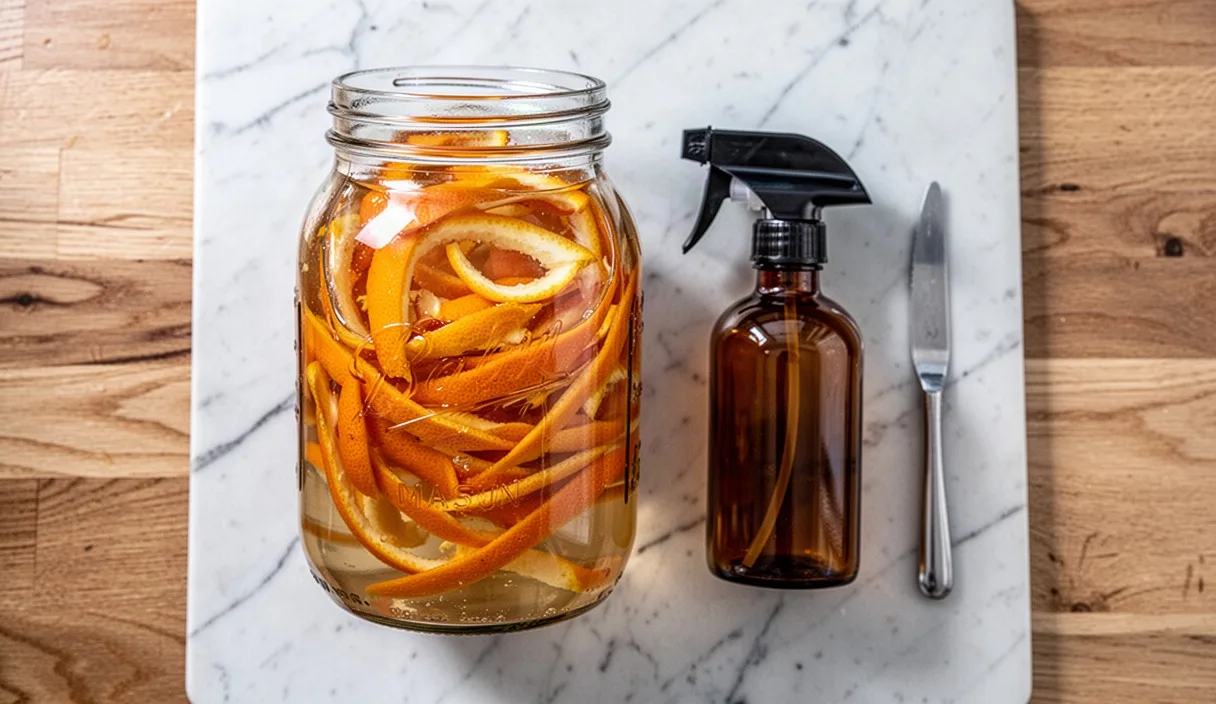
Once strained, store your citrus vinegar concentrate in an amber or cobalt glass bottle fitted with an airtight cap. In a dark pantry, this concentrated infusion retains its solvent strength and aromatic profile for nine to twelve months. Discard the batch if you detect a foul, yeasty, or moldy odor, or if you observe an opaque, gelatinous disc forming at the bottom of the vessel, which indicates bacterial contamination from unrinsed fruit skins.
Dilution Formulations for Countertops and Sinks
Never use the steeped citrus concentrate at full strength for routine cleaning. An undiluted 5 percent acetic acid solution is unnecessarily harsh on grout lines, plumbing finishes, and skin, and it wastes concentrated solvent. Proper dilution creates targeted cleaners that address specific soil types throughout the home.
Routine Multipurpose Countertop Cleaner
For daily wiping of laminate counters, porcelain sinks, glazed ceramic backsplashes, and enameled appliances, use a balanced half-and-half dilution. Combine equal measures of filtered citrus vinegar concentrate and distilled water in a spray bottle. Using distilled or reverse-osmosis water is critical; hard tap water contains calcium and iron that can react with the acetic acid, dulling your surfaces and clouding the spray over time. This creates an effective solution with roughly 2.5 percent acidity, powerful enough to cut dust and food splatters without leaving streaks.
Heavy Kitchen Degreaser
For stovetops, range hood filters, and stainless steel splash zones coated in aerosolized cooking oil, mix two parts citrus vinegar concentrate with one part distilled water. Add two drops of liquid plant-based castile soap or standard dish soap. Swirl gently to combine without generating excessive foam. The surfactant lowers the water's surface tension, allowing the d-limonene to penetrate heavy grease while the acetic acid lifts scorched organic matter. Wipe with a damp microfiber cloth, then follow with a dry cloth to buff the surface.
Hard Water and Descaling Rinse
To clear mineral rings around chrome or brushed nickel faucet bases, use the citrus vinegar concentrate completely undiluted. Saturate a cotton rag with the concentrate, wrap the damp cloth snugly around the calcified fixture base, and allow it to rest for ten minutes. The concentrated acid dissolves the alkaline mineral crust without scrubbing. Remove the rag, rinse the metal thoroughly with fresh tap water, and wipe it dry. Do not leave the acid in contact with chrome plating for longer than fifteen minutes, as prolonged exposure can cause micro-pitting on thin decorative platings.
Surfaces to Avoid: Marble, Granite, and Unsealed Wood
While citrus cleaning vinegar is versatile, its low pH makes it destructive to several common household materials. Acid does not clean these surfaces; it alters their mineral and chemical structure permanently.
Calcareous natural stones must never come into contact with citrus vinegar. This category includes marble, limestone, travertine, and onyx, all of which are composed primarily of calcium carbonate. When acetic acid touches calcium carbonate, an immediate chemical reaction occurs, converting the solid stone into soluble calcium acetate and carbon dioxide gas. Visually, this reaction appears as an "etch" a dull, rough spot on the polished stone that looks like a water ring or cloudy smear. Etching is structural damage, not a stain, and it can only be repaired by mechanical re-polishing with diamond abrasive pads.
Granite and engineered quartz require caution as well. While granite consists mainly of acid-resistant quartz and feldspar, the penetrating chemical sealers applied to protect granite from oil stains are vulnerable to acid. Acetic acid gradually dissolves these fluoropolymer or silicone sealants, leaving the porous stone beneath exposed to dark cooking grease stains. Engineered quartz counters rely on polymer resins to bind crushed stone together; recurring exposure to concentrated acid can dull the resin finish over time.
Avoid using citrus vinegar on unsealed, waxed, or oiled wood floors and butcher blocks. The acid breaks down the protective natural wax and oil molecules, drying out the wood grain and causing pale, faded patches. Finally, keep vinegar away from cast iron cookware and high-carbon steel chef knives, where it strips the polymerized seasoning layer and triggers flash rust within minutes.
Common Mistakes
- Steeping with fruit pulp attached: Leaving soft fruit flesh on the rinds introduces water, natural fructose, and sucrose. These sugars encourage mold growth during the steeping phase and leave a sticky residue on mirrors and windows after drying.
- Using unlined metal lids: Acetic acid vapors corrode standard two-piece metal canning jar bands and lids within two weeks. Rust flecks fall into the liquid, staining the infusion. Always use one-piece plastic storage lids or line metal lids with a square of unbleached parchment paper.
- Pressing the rinds during straining: Squeezing the saturated peels to extract every last drop pushes bitter particulate matter and dissolved pectin through your filter, leading to cloudy liquid that leaves micro-streaks on glass.
- Storing in cheap spray bottles: Terpenes like d-limonene are powerful natural solvents that can soften or degrade thin polystyrene or low-density polyethylene plastics. Use amber glass bottles or commercial-grade high-density polyethylene spray containers rated for solvent use.
Practical Next Steps
Begin your next batch by setting aside an airtight container in your freezer labeled for citrus peels. As you use lemons, oranges, grapefruits, or limes over the coming weeks, trim away any remaining fruit pulp, slice the peels into uniform strips, and freeze them until you have gathered a full jar's worth.
While your collection builds, assemble the simple hardware you will need for processing: a clean one-quart wide-mouth glass jar with a non-metal lid, unbleached paper coffee filters, a funnel, and a designated glass spray bottle. Once your peels are submerged, mark your calendar for a three-week steeping window. Giving the chemistry time to work in the dark will yield a crystal-clear cleaning base that cuts kitchen grime reliably without unnecessary synthetic additives.